
From Pantyresgair - The Reverse of Memory
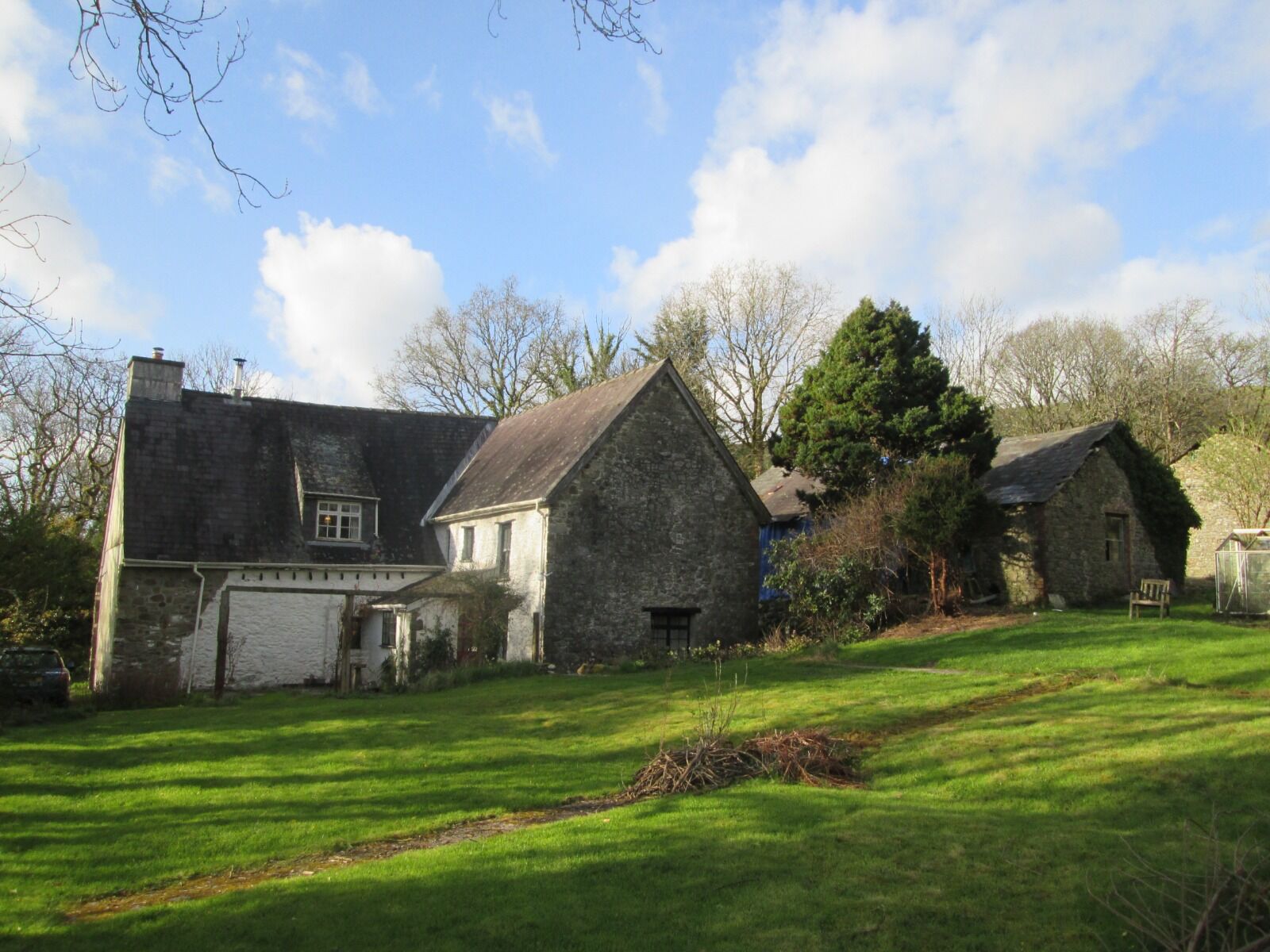
From Pantyresgair ...essays from our beautiful farmhouse home in rural Carmarthenshire
The Reverse of Memory
A seasonally influenced revelation, which threw a whole new light for me on the core of my creative output.
The Reverse of Memory
A seasonally influenced revelation, which threw a whole new light for me on the core of my creative output.
It occurred to me the other day that the way I paint is kind of the reverse of the way that our memory works…
There is something about autumn that makes it a nostalgic season, one where the mind slows down, casts back and somehow touches base with memories past.
The fact that Remembrance Day falls in this season has to be coincidental, based as it was on the date of the end of the First War, but perhaps this is also part of why the Remembrance tradition has endured so strongly, after more than a century. There is resonance with the way our minds are already inclined, and conversely it throws an extra and important layer of poignance and complexity to our autumnal vista of the past; particularly through the recognition of the absence of those who never got to experience the futures they dreamed of.
With such thoughts in mind then, maybe it shouldn’t have surprised me when, in the initial phase of a new painting the other day, it struck me that the way I paint is kind of the reverse of the way that memory seems to work…
Maybe that thought that takes a bit of explaining though:
In common with several other oil painters, I know the opening ‘movement’ of a new painting is something that looks entirely different to the finished piece in many ways. Where the finished piece is fairly ‘tight’ and loaded with a myriad of tiny, finely finished detail with a wide range of colour to it, this first phase is free and loose, with sweeping brushstrokes. It’s almost like a separate artwork actually, largely impressionist in style, expressing the conceptual idea of the finished work mainly through the use of light and dark in a narrow, almost singular colour range.
It is a rapid phase of the work too, I go from blank canvas to an expression of the whole piece, often in a matter of a few hours. This phase is never quite ‘complete’ though, as it subsequently subtly morphs into the next phase of the creation, but there is a point in this where I often feel I could just stop and call the piece a complete work in its own right.
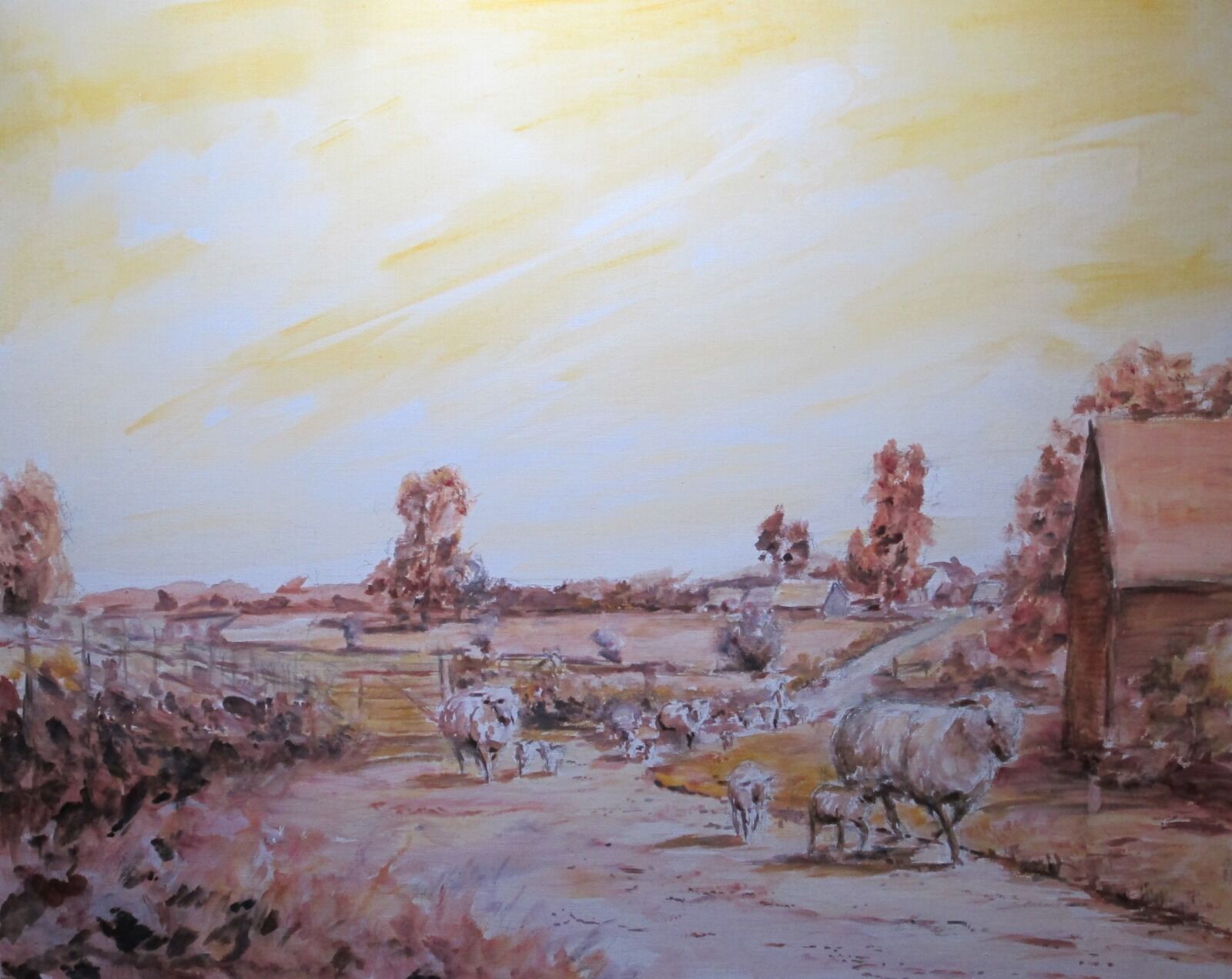
My painting 'Walk to the Farm - Spring' in this early stage
As I write this, I realise I am walking on familiar ground.. a path already traversed before, some of what this moment in the piece represents I have explored previously, in my article, 'The Start of a Thing'
Today though, I have arrived here from a new direction, and just like the surprise encounter with a familiar but forgotten clearing in a wood on a rural walk, the sudden view of it all from a different direction throws new insight into what is present there.
The nostalgic, autumnal view of this point in the creative process makes me wonder if some of the resonance of this expression of place and moment chimes with poignant familiarity as it echoes how our memories actually become over time: There in front of me for a short while are the faint haunting echoes of a vivid, sharp, full ‘technicolour’ reality that we were once present in.
But experience and research tell us that no memory ever remains this way for us. Our memories, for better or for worse, are like ‘lossy’ digital files. Every time we open and revisit them, they become changed, and conversely if we fail to revisit them, they are like forgotten objects in a museum collection, deteriorating for lack of conservation.
One suspects that there are complex reasons why our minds hold memories like this, with both positive and negative implications for us. But that relationship with our memories is a core piece of ourselves. Our almost unfathomable interactions with the flickering and ever shifting echoes of our past is core to who we are. Furthermore, the emotional experience of logically and intuitively, intentionally and unintentionally, weaving our pasts into our presents, reshaping both along the way, feels like a significant part of what it means to be human.
Exploring the vast implications of this are probably best left noted, but unexplored, for now, for risk of wandering off down an inviting but uncharted extra thought line, a route away from this ‘familiar but forgotten’ path arrived at today.
Instead let us stay here in that known, and surprisingly encountered, clearing in the wood and appreciate that first layer of a piece of art work, that will become entirely subsumed within the layers of paint to be slowly built upon it, but which also remain whole and forever cast underneath it at its base.
For if that first layer of the painting is like our first encounter with an old memory in our mind, then perhaps the rest of the journey of my art is to build a connection back from that to the moment and place that caused it to be there for us in the first place.
Heaneys’ words ring in my mind:
“The forewarned journey back, into the heartland of the ordinary”
It’s a journey that our minds can never actually make- there is no rewind back to when the memory was sharp and unworn by the repeated distortions of our own minds’ attempts to access it.
But the artist has a different way forward to reach out to the memory: One that doesn’t claim to be the original, but is built from layers repeatedly and respectfully added.
It is as if the paintbrush takes its own journey along other routes through the mind, to evoke the feeling and meaning of the original for us. On its way it finds fresh energy from recently refreshed stimuli to recharge something of the fire and spark that made that first moment precious, and hold its discoveries forever unsullied by time on our walls.

The finished piece 'Walk to the Farm - Spring' - after the completed 'journey of the brush'
There is something about autumn that makes it a nostalgic season, one where the mind slows down, casts back and somehow touches base with memories past.
The fact that Remembrance Day falls in this season has to be coincidental, based as it was on the date of the end of the First War, but perhaps this is also part of why the Remembrance tradition has endured so strongly, after more than a century. There is resonance with the way our minds are already inclined, and conversely it throws an extra and important layer of poignance and complexity to our autumnal vista of the past; particularly through the recognition of the absence of those who never got to experience the futures they dreamed of.
With such thoughts in mind then, maybe it shouldn’t have surprised me when, in the initial phase of a new painting the other day, it struck me that the way I paint is kind of the reverse of the way that memory seems to work…
Maybe that thought that takes a bit of explaining though:
In common with several other oil painters, I know the opening ‘movement’ of a new painting is something that looks entirely different to the finished piece in many ways. Where the finished piece is fairly ‘tight’ and loaded with a myriad of tiny, finely finished detail with a wide range of colour to it, this first phase is free and loose, with sweeping brushstrokes. It’s almost like a separate artwork actually, largely impressionist in style, expressing the conceptual idea of the finished work mainly through the use of light and dark in a narrow, almost singular colour range.
It is a rapid phase of the work too, I go from blank canvas to an expression of the whole piece, often in a matter of a few hours. This phase is never quite ‘complete’ though, as it subsequently subtly morphs into the next phase of the creation, but there is a point in this where I often feel I could just stop and call the piece a complete work in its own right.
My painting 'Walk to the Farm - Spring' in this early stage
As I write this, I realise I am walking on familiar ground.. a path already traversed before, some of what this moment in the piece represents I have explored previously, in my article, 'The Start of a Thing'
Today though, I have arrived here from a new direction, and just like the surprise encounter with a familiar but forgotten clearing in a wood on a rural walk, the sudden view of it all from a different direction throws new insight into what is present there.
The nostalgic, autumnal view of this point in the creative process makes me wonder if some of the resonance of this expression of place and moment chimes with poignant familiarity as it echoes how our memories actually become over time: There in front of me for a short while are the faint haunting echoes of a vivid, sharp, full ‘technicolour’ reality that we were once present in.
But experience and research tell us that no memory ever remains this way for us. Our memories, for better or for worse, are like ‘lossy’ digital files. Every time we open and revisit them, they become changed, and conversely if we fail to revisit them, they are like forgotten objects in a museum collection, deteriorating for lack of conservation.
One suspects that there are complex reasons why our minds hold memories like this, with both positive and negative implications for us. But that relationship with our memories is a core piece of ourselves. Our almost unfathomable interactions with the flickering and ever shifting echoes of our past is core to who we are. Furthermore, the emotional experience of logically and intuitively, intentionally and unintentionally, weaving our pasts into our presents, reshaping both along the way, feels like a significant part of what it means to be human.
Exploring the vast implications of this are probably best left noted, but unexplored, for now, for risk of wandering off down an inviting but uncharted extra thought line, a route away from this ‘familiar but forgotten’ path arrived at today.
Instead let us stay here in that known, and surprisingly encountered, clearing in the wood and appreciate that first layer of a piece of art work, that will become entirely subsumed within the layers of paint to be slowly built upon it, but which also remain whole and forever cast underneath it at its base.
For if that first layer of the painting is like our first encounter with an old memory in our mind, then perhaps the rest of the journey of my art is to build a connection back from that to the moment and place that caused it to be there for us in the first place.
Heaneys’ words ring in my mind:
“The forewarned journey back, into the heartland of the ordinary”
It’s a journey that our minds can never actually make- there is no rewind back to when the memory was sharp and unworn by the repeated distortions of our own minds’ attempts to access it.
But the artist has a different way forward to reach out to the memory: One that doesn’t claim to be the original, but is built from layers repeatedly and respectfully added.
It is as if the paintbrush takes its own journey along other routes through the mind, to evoke the feeling and meaning of the original for us. On its way it finds fresh energy from recently refreshed stimuli to recharge something of the fire and spark that made that first moment precious, and hold its discoveries forever unsullied by time on our walls.
The finished piece 'Walk to the Farm - Spring' - after the completed 'journey of the brush'